
Fake Polls, Real Consequences: What Voters & Media Should Watch in 2026
Sep 25, 2026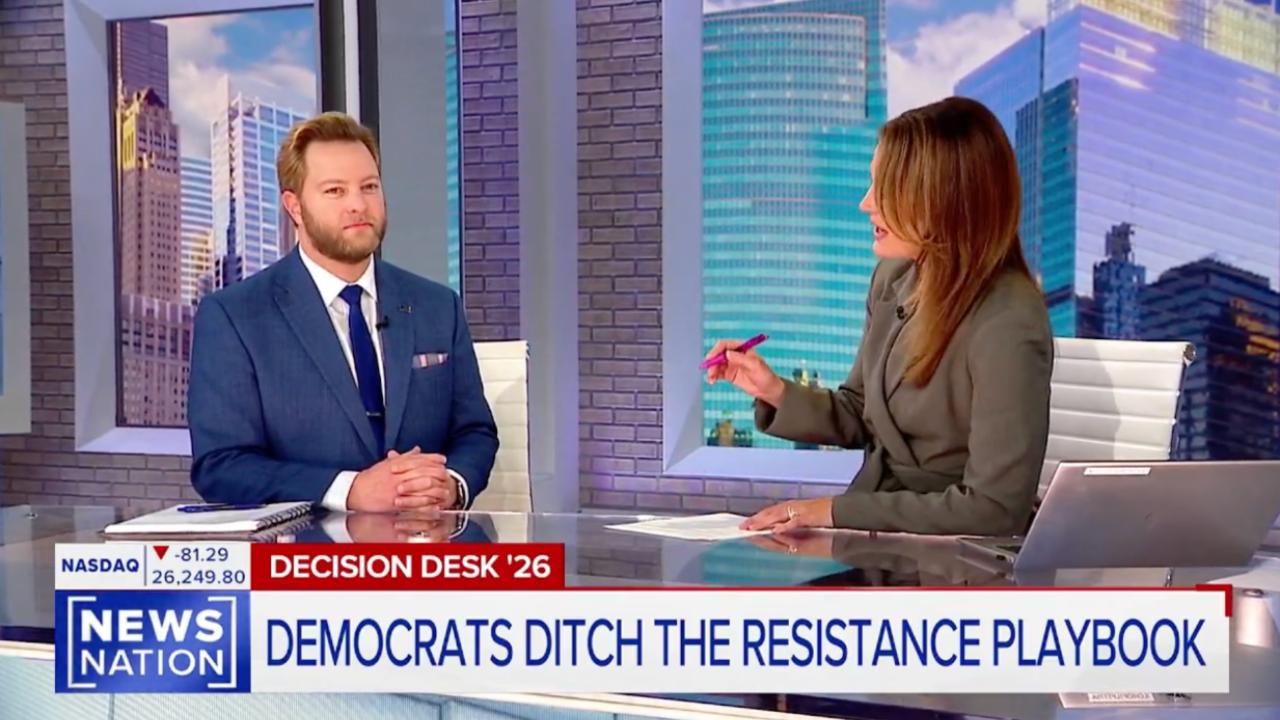
Key Takeaways: Recent controversies involving fabricated polling are raising new questions about trust, transparency, and how political polling spreads through the media. American Pulse Research & Polling lead pollster Dustin Olson says voters and journalists should distinguish between outright fake polls, polls designed by political actors to influence a narrative, and legitimate surveys that can still miss fast-moving electorates by paying closer attention to methodology, crosstabs, and who is actually standing behind the numbers.
With the 2026 midterms quickly approaching, political polls are everywhere. But recent races have highlighted an important distinction: A poll can be wrong, a poll can be difficult to interpret, and something presented as polling may not even be a poll at all.
Dustin Olson, lead pollster for American Pulse Research & Polling, recently joined The Daily Wire, Newsmax, NewsNation, and NTD to discuss growing skepticism around political polling, including fabricated poll results released by malinfluences that circulate through campaigns, media coverage, social media, and prediction markets.
The controversy presents several different problems for voters and political professionals.
The first is straightforward: What happens when someone makes up a poll?
The second is more subtle: What happens when legitimate polling methods are used in ways designed to influence a political or media narrative?
And the third is more complicated: Why can legitimate polling still miss an election, particularly in volatile races?
When a “Poll” Doesn't Poll Anyone
The most troubling example came from fake polling firm, Median Strategies, which acknowledged publishing fabricated polling data and later characterized the effort as an “experiment” designed to see how unverified polling information could spread through the political information ecosystem.
One purported poll showed Los Angeles Mayor Karen Bass nearly 12 points ahead of rival Nithya Raman. The numbers were circulated publicly and shared by Bass before the post was later deleted.
During an appearance on The Daily Wire’s Morning Wire, Olson said completely inventing polling results remains extremely unusual, and it is incorrect to call it a poll when it didn’t poll anyone.
“It's extremely unusual, and I don't know if I quite buy this whole idea that it was a social experiment, but I mean it's happened in the history of the media. I would say not in polling, where people put out numbers that are fake. They never bother to poll anybody. That has happened over the decades, but it is not a common thing.”
But Olson also drew an important distinction between completely fabricated polling and another problem he said occurs more frequently.
“What's more common is what you often see in the media is what I would call public manipulation polls, where people might cook their numbers a little bit in one direction to try to get a media narrative. We do see that kind of stuff happening, but just completely made up out of whole cloth. That's very unusual.”
That distinction adds another layer to polling skepticism.
Watch Dustin Olson break down fabricated political polls, polling manipulation, prediction markets, and why one fake poll can undermine confidence in legitimate research.
There is a difference between legitimate research that ultimately misses an election, polling constructed or presented in ways to shape a narrative, and numbers invented without surveying anyone.
On Newsmax’s First Edition, Olson argued that the last category should not be treated as a failure of the polling industry at all.
“First, I would just suggest not referring to[Median Strategies] as a polling firm because this group didn't poll a single person; they just put out fake numbers, attempting to apparently either impact the elections or to do the social experiment that they claim that they were doing, but clearly this is not useful to people having trust in our electoral system or having trust in polling. I know my colleague here that we both deal with this all the time: people don't trust polls, but the fact is that we really do want people to take them so that we can accurately represent what the public opinion is.”
Watch Dustin Olson discuss fabricated political polls, media accountability, prediction markets, and how voters can identify credible polling on Newsmax.
Legitimate public opinion research can produce an inaccurate projection or fail to capture a late shift in an electorate. Pollsters make methodological choices about sampling, turnout models, survey modes, weighting, and other factors that can affect results.
Fabricating numbers without surveying anyone is fundamentally different.
Yet once those numbers enter the political information ecosystem, the distinction may not be obvious to voters scrolling through social media, journalists working on deadlines, or campaigns looking for signs of momentum.
Fake Polls Can Move More Than a News Cycle
The potential consequences become more significant as election prediction markets grow.
Olson told The Daily Wire’s Morning Wire that prediction markets introduce a new incentive into American elections because participants can have financial positions tied to political outcomes.
The motive behind the Median Strategies polling remains unclear. Olson emphasized that several explanations remain possible, but said manipulation of prediction markets is one possibility worth considering.
The Wisconsin primary illustrates why that matters.
Purported polling showed Francesca Hong winning by 20 points. Hong ultimately lost by one point. Other legitimate polls also showed Hong leading by double digits, meaning the fabricated numbers resembled the broader polling consensus.
Olson described that as the “herd effect.”
On Morning Wire, he explained how even one fabricated poll can damage confidence in every legitimate survey surrounding a race.
“I think, in some ways, you put this ounce of poison into the well, and it poisons all of the polls that were done in that race. All of which showed that Francesca Hong was leading by a pretty good margin, and we ended up with a very, very narrow victory for Crowley, mostly out of Milwaukee.”
That does not mean the legitimate polling surrounding the race was fabricated.
Olson noted that substantial developments occurred after many surveys were conducted, including late changes in the race and significant national Democratic involvement. He also emphasized that polling represents voter opinion at a particular moment.
On Newsmax, Olson similarly explained that the fake results appeared designed to resemble everyone else's.
“Well, when you look at that, instead of doing an actual poll, they were doing what we would call the herd effect. They were just making their numbers look like everybody else's. So everybody else who was polling that race also had Francesca Hong up by double digits. This is, I think, probably where there might be some teeth in the law. I'm not a lawyer, but this definitely has an impact on these prediction markets. It is something I think the SEC probably could look into. Basically, gaming markets. I have a feeling that's probably what was behind it.”
This whole episode demonstrates how quickly numbers can have an impact when the media fails to ask questions or even understand what they are reporting.
That makes verification increasingly important for campaigns, journalists, political professionals, and voters.
How Can You Tell Whether a Political Poll Is Credible?
A recognizable polling firm name is just the beginning.
Credible political polling should provide enough information for readers to understand how the survey was conducted. That includes details about methodology and, when available, cross-tabs showing how different groups within the sample responded.
Olson said the absence of those basics should be a warning sign.
“It's an indictment on the media. This really has nothing to do with pollsters because, as far as I'm concerned, there weren't any pollsters involved in the story. But what they need to know is that if [the public media poll doesn't] provide cross-tabs, they don't provide details of what the poll says, if they don't tell you what the methodology is, if the reporter hasn't asked these questions, then they haven't reported on the methodology, which is pretty common. The reporter won't even say how the poll was conducted. That poll is not something to believe, you should take it with a big grain of salt, in my opinion.”
For readers evaluating campaign polling or public opinion research, several questions follow naturally:
- Who conducted the survey?
- Who is willing to put their name behind it?
- How were respondents reached, and if by multiple methods, what percentage of the sample came from each method?
- Were respondents compensated at all, or were they from a panel where they previously opted in?
- What population was sampled?
- Is the methodology disclosed?
- Are top-lines or cross-tabs available, and can you read the question language in full?
Those questions don’t guarantee that a poll will predict an election perfectly. However, they help establish whether legitimate survey research was conducted in the first place, or provide context for what biases may be at play.
A Legitimate Poll Can Still Miss
The Wisconsin race also illustrates why skepticism needs to be applied carefully.
A fabricated poll and a legitimate poll that misses an election result are not the same thing.
Following David Crowley’s narrow victory over Francesca Hong, Olson joined NTD Evening News to discuss why polling had shown a dramatically different race (before the Median Strategies fabricated poll was revealed).
One factor was timing. Olson noted that Crowley had suspended his campaign while many polls were being conducted, and then returned to the race.
“This race has changed quite a bit over the recent weeks and months. You know, a poll is only a snapshot in time, and it can only tell you what it is. Just like two weeks ago, the ultimate winner, Crowley, had actually suspended his campaign, and when a lot of the polls were actually being conducted, he wasn't an active candidate. So that's part of the issue.”
But timing wasn’t the only challenge.
Olson also pointed to the methodology behind some media polling, describing some media polls as “drive-by pollsters” that run inexpensive polls to grab headlines without adequately accounting for the demographic complexities of difficult states.
“And there are certain states that are very difficult if you don't really get into the details of the demographics. You have states like Wisconsin, Michigan, and Maine where you have very large rural areas that cover the state, but then you have some big population centers that act very differently: Madison, Milwaukee, Detroit, or Dearborn in Michigan. And if turnout is at all off from what it's been historically, you could have a very different outcome than what people are planning for.”
Watch Dustin Olson explain factors explaining why polling missed Wisconsin’s Democratic primary, how late movement in the race affected the result, and why difficult state demographics and turnout can complicate political polling.
The political environment surrounding the race also changed rapidly.
Olson said the Democratic establishment responded aggressively after the previous week’s Michigan primary, treating it as a wake-up call. Following controversial El-Sayed’s Michigan victory, support dried up for the even more controversial Hong in Wisconsin. Hong did not receive support from prominent progressive figures such as Bernie Sanders and Alexandria Ocasio-Cortez. Olson argued those late developments helped explain why polling conducted weeks earlier did not reflect the eventual result.
The same underlying challenges came up again during Olson’s NewsNation appearance.
Olson discussed why states such as Wisconsin and Michigan can present genuine challenges for political polling, particularly during primary elections.
Large urban populations in places such as Milwaukee and Detroit must be balanced against extensive rural areas. Primary electorates can be even harder to model, and a substantial pool of undecided voters can shift quickly near Election Day.
Olson said progressive candidates had experienced genuine momentum, but Democratic establishment efforts to counter that momentum also affected the race.
“A couple of the states that have had this issue have been Michigan and Wisconsin. These are states that are traditionally very difficult to poll because of places like Detroit or Milwaukee. They're big cities, but then you also have these large areas. They're rural, and to get the mix in a primary, in particular, can be very difficult. However, I think part of it is that these DSA candidates or very progressive candidates did have a surge, but the National Democratic establishment really came in hard to try to stop that momentum, and I think they were pretty effective. We find in primaries, if there's a large undecided vote, that those primaries can turn pretty quickly.”
Watch Dustin Olson break down polling skepticism, difficult primary electorates, voter sentiment, and what late-summer polling can — and cannot — tell us about the 2026 midterms.
Together, the appearances illustrate why a legitimate poll can miss the final result without being fraudulent.
Political polls are snapshots of voter sentiment at a particular moment, based on a sample and a set of assumptions. When the candidates, turnout environment, political support, or undecided voters move after a survey is conducted, the electorate captured by that poll may look different by Election Day.
Don't Confuse an August Poll With an Election Result
Timing matters, too.
During his NewsNation appearance, Olson pointed to an analysis by colleague, pollster Patrick Ruffini, examining Senate races over the past four election cycles. Olson said the analysis showed a recurring pattern in which Democrats appeared stronger in late-summer polling than they ultimately performed on Election Day.
The broader lesson isn’t that polls should be ignored. It is that political polling needs context.
Late-summer polling can identify the state of a race, the issues shaping voter sentiment, and where campaigns have strengths or vulnerabilities. It cannot tell campaigns with certainty what will happen over the remaining weeks, and some polls earlier in the campaign season clearly tried to shape perceptions of the races, attempting to be self-fulfilling prophecies..
The political environment itself is also changing.
Olson identified affordability as the leading concern for voters heading into the fall, with immigration also frequently appearing among the top issues. He also pointed to the ongoing conflict with Iran, gas prices, and redistricting as factors that could shape the midterm environment.
Those conditions can move. So can voters.
The Better Response to Polling Skepticism Is More Transparency
Polling skepticism isn’t new.
But fabricated polls create a different challenge because they exploit the appearance of legitimate public opinion research without doing the underlying work.
For reputable polling firms, media organizations, and campaigns, the answer isn’t to ask voters to trust every number carrying the word “poll.”
It is to make the work more transparent.
Methodology matters. Top-lines and cross-tabs matter. Who conducted the survey matters. How respondents were reached matters. And the context surrounding when and why a survey was conducted matters.
American Pulse Research & Polling conducts political polling, community sentiment research, phone surveys, and market research designed to help campaigns and organizations understand what people actually think—not simply what makes the most compelling headline.
As 2026 races accelerate, voters will encounter plenty of polling that changes, polling that conflicts, and polling that ultimately misses the final result.
That’s part of measuring a moving electorate.
Making up the electorate entirely is something else.
American Pulse Research & Polling
For readers who want to go deeper than the polling headline, the American Pulse Polling Club provides access to polling analysis, briefings, and insights into the races and issues shaping the political environment.
American Pulse Research & Polling also provides custom political polling, benchmark surveys, public opinion research, multimodal surveys, top-lines, cross-tabs, polling briefings, and strategy sessions for campaigns and organizations that need data-driven insights of their own. Readers can also suggest races and issues they would like to see included in future Polling Club research or request a quote for custom polling.
GET YOUR OWN RESEARCH ROADMAP, STRATEGY SESSION, & QUOTE
Ready to gain a competitive edge? Submit the form below to begin the process of commissioning your own political poll and get at no obligation the following:
- Complimentary Research Roadmap, outlining the strategic insights essential for your success and how we would survey to get them
- Strategy Session with a Top Strategist & Researcher, offering expert analysis and tailored advice to achieve your objectives
- Special Discount on Your First Survey if you choose to move forward
Get Your Own Research Roadmap & Strategy Session Now—because optimal strategy requires transformative insights.
Want To Know the Headlines Before They Happen?
Join Polling Club to:
- Get exclusive polling
- Suggest questions to be asked in our public polling
- Decide topics we tackle in our public polls
Polling Club polls are public polls for media and polling club members and are different from internal surveys commissioned by clients. Also, don't worry, your information will never be shared.
We hate SPAM. We will never sell your information, for any reason.